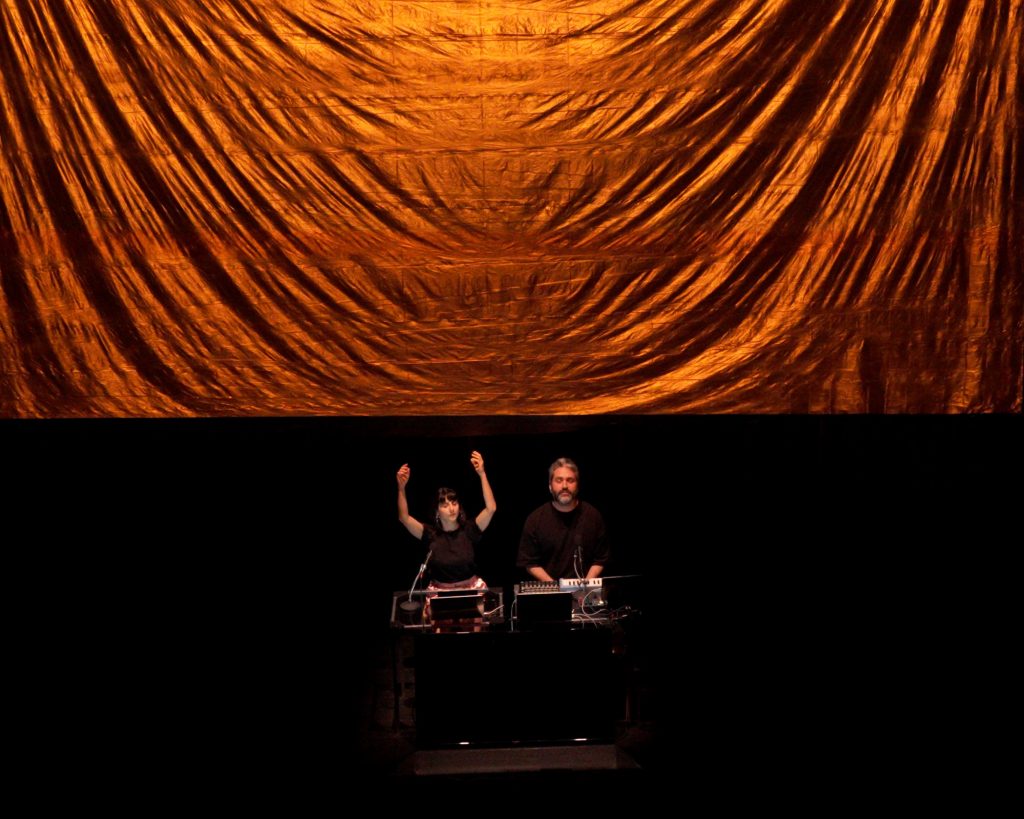
DARLING (2013) emerged from the friendship between Moya Michael and Igor Shyshko, two artists born in the same year yet shaped by radically different socio‑political realities: apartheid South Africa and post‑Chornobyl Soviet Belarus. Their conversations on nationality, place, and historical circumstance gave rise to a performance tracing their individual and overlapping timelines, from their birth year in 1976 to their meeting in 1997. Through archival recordings, political speeches, and personal sound memories, they built a dense aural collage that became an autonomous presence within the performance, a “third dancer” mediating between historical narrative and the corporeal present.
Agenda
Filter by artist
DARLING (2013) emerged from the friendship between Moya Michael and Igor Shyshko, two artists born in the same year yet shaped by radically different socio‑political realities: apartheid South Africa and post‑Chornobyl Soviet Belarus. Their conversations on nationality, place, and historical circumstance gave rise to a performance tracing their individual and overlapping timelines, from their birth year in 1976 to their meeting in 1997. Through archival recordings, political speeches, and personal sound memories, they built a dense aural collage that became an autonomous presence within the performance, a “third dancer” mediating between historical narrative and the corporeal present.